
Memories from the Olive Harvest
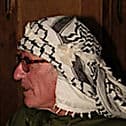
Sayel Jabarin, activist in the Combatants for Peace organization, and a board member in A Land for All organization
The Olive Harvest Is a Symbol of Unity and Partnership
We are connected to the land, and every season brings something different. There is the vegetable season in the spring; in the summer, sour fruits; then grapes and figs; and finally, in the autumn, the olives, the season that closes out the year. Then, in the winter, after February, we begin working the land all over again. All of this is tied to the rhythm of life. For instance, anyone wanting to get married, pay for studies, or buy something major – all of these things always happen at the end of a season, when there is money.
The olive harvest is the major season, and it begins after the first rain. You shouldn’t pick before the first rain, because without rain the olives stay dry, with no oil. What does happen is that the women always go out before the rain and pick the nicest olives for pickling. That isn’t called the harvest. They choose the finest fruit from the tree, which tastes better at the very start of the season.
Every family has olive trees. I remember my father’s house, my uncles’ and aunts’ houses – everyone had olives, and the harvest was a family event, even a community one. I remember my grandmother, how she used to bring the whole family together during the harvest season. She would call everyone – children, grandchildren, everybody. She would prepare everything – the tarps, the gloves, the food, the tea – and invite everyone to come, and attendance was mandatory. We would all show up, and it was a huge family gathering, bigger than the grape harvest, bigger than the vegetables and other fruits. And Grandmother would always say: "Talk less! The more you talk, the less you pick." She didn’t use the word "meditation," but she used words like: pray, give blessings, say Bismillah so God will bless the work and bring plenty of oil; don’t curse, don’t speak poorly of people...
There are also times when families team up and harvest the fields together so there are more working hands, and that brings everyone closer. There are countless stories about couples who met during the olive harvest and later got married and started a family. It’s the season when everyone sees one another, gets to know the families, and the children play together. That’s why the olive harvest is one of the symbols of sumud (steadfastness) – it fosters unity among the people and a spirit of partnership.
Even in government offices, there is a law stating that anyone who owns a large olive grove can take the entire month of the harvest off without it counting against their vacation days – because the harvest has to be finished within 40 days, before the heavy winter rains begin. Anyone who doesn’t make it in time and goes out to the land after the heavy rains loses a lot of olives, because they fall to the ground, it gets muddy, and they disappear into the soil if you step on them.
I remember on Fridays, at five or six in the morning in our village, everyone would be awake. My father and grandmother would stand at the entrance to all the houses with packed food, with a car up top and a donkey, and we would all head out, the entire village. By 11 or 12 o'clock, the village was empty. Nobody was there. Everyone was out in the fields, picking and singing. Suddenly the field was full of people. Some people even slept there. We had a cave with a locked door that my grandfather had dug in our field, and we used to sleep there.
The harvest is a massive event. There is a saying in Arabic that during the olive harvest, there is neither morning nor evening – the days grow short and all the time is devoted entirely to picking. Everything else is put on hold during this time. There are no other social events, no weddings, no parties, because everyone knows nobody would come. Even the few people who don’t own olive trees participate – they come to help, to be part, without any talk of payment, and at the end they receive olive oil. That way, nobody in the village buys oil. And those who have plenty, once everyone has enough, sell the surplus outside the village.
We are a conservative society; usually, it’s mainly the men who go out into the wider world, but during the olive harvest, everyone goes out, and all the organizing is the women’s role, their responsibility. I used to watch my mother and grandmother: how they gathered people, how they checked in, brought supplies, coordinated, pulled whatever strings were needed to make sure everyone came, how they were always present. And every day when returning home from the harvest, they brought the olives back – and we didn’t leave them in sacks, so they wouldn’t get crushed. We would clear out an entire room in the house and spread the olives across the floor so they could air out – and the women managed all of that. The olives stayed spread out in that room until the whole season was over, and only then were they packed back into sacks and taken to the olive press to extract the oil.
The Olive Tree Gives So Much
We didn’t sell our olives. My grandmother would distribute them to everyone in the family, and it supplied us with oil for the entire year. We never had to buy any.
I remember the sweets my mother used to make for us in the winter... When there were plenty of olives in the harvest, we had plenty of sweets in the winter. There were no candy shops, no store-bought sweets, so she would make treats for us from grape syrup and olive oil. Everything is made with olive oil – you cook with it, fry with it, and simply dip bread into it and eat.
For example, my grandmother tells a story that during the Ottoman period, my great-grandfather was the Imam of the village mosque. The Ottomans didn’t pay him a salary, so instead of money, he received olive oil from the villagers. She says that every morning he would drink a small glass of olive oil, that was his espresso.
After the oil pressing is finished, people take the leaves and whatever is left of the olives – the skins and the pits – dry everything out, and form it into balls that are tossed into the heating stove instead of wood. It’s healthier and better for the environment than burning wood.
Olive leaves are also good for tea. At the start of autumn and winter, when people cough and catch colds more often, tea brewed from olive leaves soothes the lungs.
When heavy rains cause landslides on the mountain slopes, olive trees are the solution. They hold the earth in place.
Also, when you have fruits like grapes or figs, passersby can pick them and animals can ruin them – but not with olive trees. So the trees always remain standing and strong, and the olives stay on the branches until the owners come to harvest them.
It Isn’t Sacred, It’s Blessed
The olive is mentioned in the Quran, too. It is blessed. The Quran explains how to care for the tree – it describes how to prune it so that it opens toward the east and the west. Trees that aren’t pruned that way produce less olives. I always look at the olive trees along the roads to check how they’ve been shaped. There is a strong religious tradition behind this.
Even if you aren’t on speaking terms with a particular neighbor, somehow during the olive harvest, it gets resolved. Because it feels wrong to fight during the harvest. You have to make peace, even if there’s a dispute, because you have to come help – there are shared meals, breaks together, everyone is in the same place, and somehow people reconcile. So it’s a symbol of peace, a symbol of coming together. I think that’s why the olive tree is a symbol of peace for us.
You must never spill olive oil. My grandmother would always send all the children outside so they wouldn’t roughhouse and knock it over, and also so they wouldn’t say bad words near the oil. No shouting, no whistling. She would recite from the Quran and offer blessings. She always said you don’t need gloves during the harvest – if you’re picking and oil drips onto your hand, that’s a blessing; you shouldn’t block it.
It is written in the Quran that there is a miracle in olive oil, that we must constantly research it and discover more. We still believe there are properties in the oil that we don’t yet know about – more gifts it has to offer that are waiting to be uncovered. In the Quran there is wisdom, there are instructions, and we must study and interpret them to understand what needs to be done.
I grew up believing that we are the best in the world at olives, that only we have olives like these. There are songs about the olive: "A helping hand, olives from my land, the very best there are" – a song calling on people to help with the finest thing the earth provides. When I grew up and started hearing that there are olives in Spain, Italy, France, I was surprised to learn that. We take pride in our oil. Our leaders always say: "We are the people of oil and za'atar." Even if they close us in, we will eat oil and za'atar and remain. To this day, I eat olive oil and za'atar for breakfast, and so do my kids. I love that they love it.
Still, I ran away from my father, from farming, because I wanted to see the world. And now, after I’ve seen it, I know that the best place to be is out in the field. I was in the best place all along, and I didn’t know it. I ran away. And my dream now is to return to the field and simply make a living from a small farm.